


10 years.
10 years since the very first shoe Nike designed for CrossFit came out – the Metcon 1. A shoe that is near and dear to my heart since it’s what I believe boosted me to have the platform I do today. Since then we’ve had some good years, some great years, and some rough years.
I mean, really – what is one to expect from 10 years of change? You can’t have a little good without a little bad…
The Metcon 9 was a shoe that some would consider, the lowest point for the Metcon series. Saying that it was a bad training shoe isn’t really fair though – it still did all the things you needed it to do and could be had for some killer sale prices. It just meant sacrificing your money on a product that didn’t do anything particularly better than the rest of the field, that of which got much more competitive. In a way, it kind of felt like Nike pressed the cruise control while the new players went full throttle.
Nike needed a comeback in a big way, so is the Metcon 10 the half court shot at the buzzer they needed? Lets dive in…

What changed?
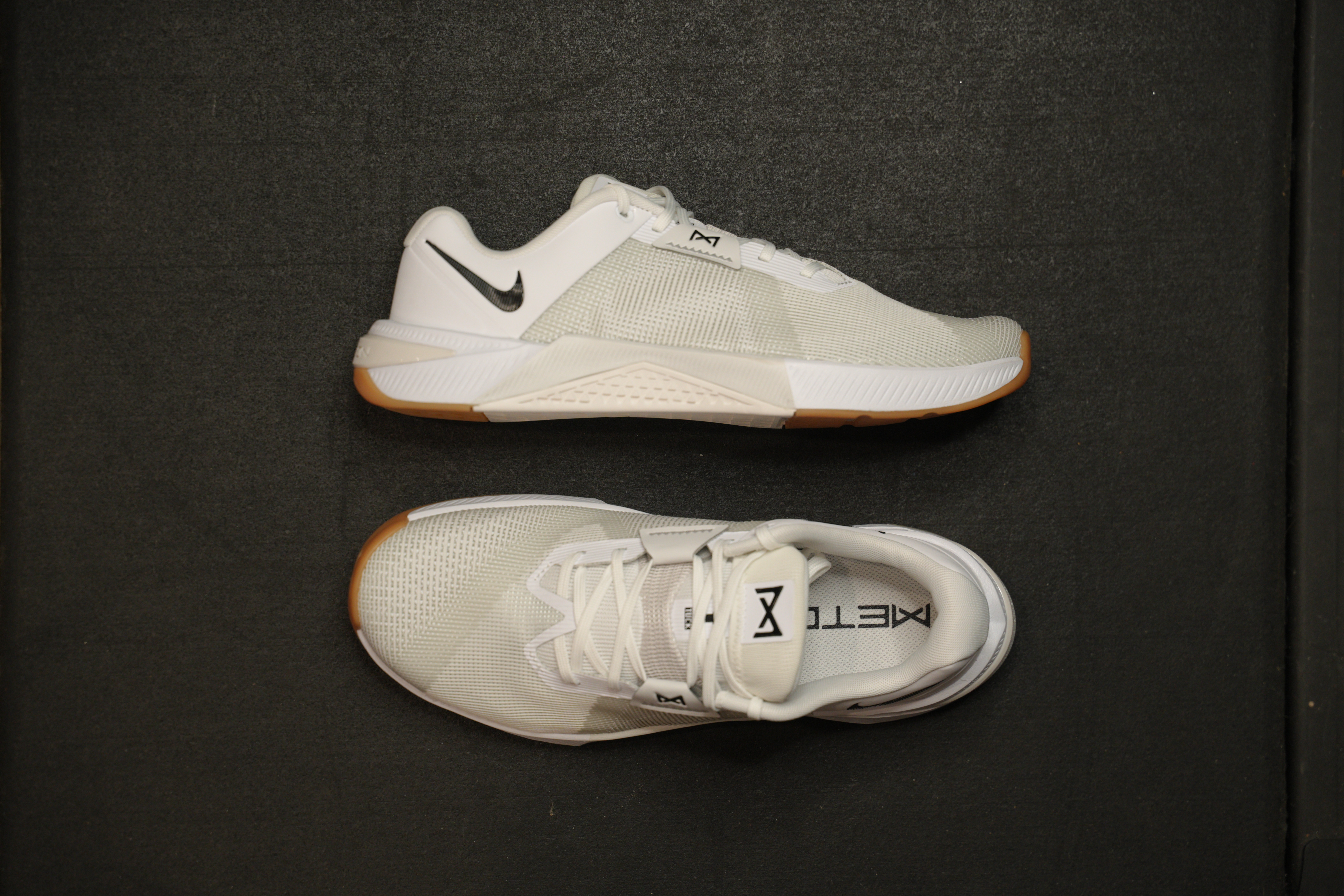
Metcon 10 is seemingly built on the same last and tool that the 9 was on – I would wager on this judging by the general shape of the outsole and upper. One thing that Metcon 9 did really well was that it was the first of the series to have a wide toebox. I’m not someone that has particularly wide feet so I always felt like they were too big, but I can appreciate not having my foot in a vise. The new open-holed engineered mesh upper of the Metcon 10 is something familiar if you tried the Zoom Metcon Turbo 2, another shoe that was fairly wide but was generally looked over. The mesh allows for mobility, without discarding foot containment – it flexes well without any hints of hotspots but still holds the foot when subjected to dynamic movements. It’s currently pretty hot in Southern California so every shoe can feel like they get hot. I found the breathability to be just acceptable with the new upper, but vastly better than the foot sauna 9’s.

Oddly, Nike stepped away from React midsole foam for the 9 and opted for a dual density setup where there was a softer foam inside a more dense carrier. It felt fine under most slow movements, but ended up feeling a bit vague for lifts that required timing. For the 10’s, we get ReactX, though a foam typically associated with running and recovery shoes as of late. Sounds crazy, but as we should know by now, all foams can be tuned for the task at hand. Initial step in feel is touch softer and more full feeling than the 9’s which might alarm you but when you actually start moving, the foam feels much more responsive and tactile than the previous iteration’s. No official word of what the heel-toe offset is, but to my feet, these feel like they have a 4mm drop as they always have.
While the general shape of the outsole remains the same with points at the metatarsals and heels, reflecting the shape of a hexagon, it’s materials have changed in a big way. The forefoot and heel rubber is “004 Sticky Rubber“, while the midfoot seems to use a harder wearing rubber, presumably to hold up for rope wear. The front, middle and back are decoupled to aid in flexibility in addition to there being flex grooves under the toes. It’s tread pattern is a uniform, recessed triangluar lug which did a great job holding the rubber mats in my gym and wooden platform all around, but more noticeably in the front and back of the shoe.

Speaking of rope climbs – thank god we got rid of the ugly medial guard. In place of that is a midfoot band that covers both sides of the shoe. It’s not nearly as gaudy as it has been, but still seems to offer enough durability for rope abrasion and acts as a cinch for securing your foot. Medial and lateral sidewalls still extend up from the outsole to grip the rope, but are more radiused on the inside and are sharper on the outside of your foot. Gripping the rope on the way up is a breeze and the radiused edge makes descents a seamless journey. Unfortunately, the lower sidewall means there’s some exposed midsole foam, which after about 5 climbs is already showing wear. Structurally, I doubt it will affect the shoe much, but it’s going to look ugly.
Love it or hate it, Hyperlift makes its return to the 10’s – albeit in a much less intrusive style. The concept was simple in the 7-9’s – stick a inflexible wedge into the heel of the shoe to decrease compression and help stabilize your lifts (in the 5/6 it was to add some heel lift for mobility issues). It worked great for what it was meant for, unfortunately it made a shoe that people already complained about running in, into a shoe that you just couldn’t run in unless you were a foot contortionalist. This year, the clip starts exposed at the heel of the shoe and acts as a plate to use for handstand push-ups, much like it recently was. Except now, instead of just being sandwiched between the outsole and midsole, the plate is embedded into the foam allowing for almost full flexibiliy throughout the shoe. All while still remaining minimally compressible when putting force down into it.

All this wouldn’t mean too much if your foot didn’t seat properly into the shoe. Ah yes, the dreaded Metcon heel slip – honestly this hasn’t really been a thing in a long time but the Mandela effect has its ways. The ankle collar is padded well enough to prevent heel slip and is a bit shorter so that it doesn’t rub you the wrong way. The foxing is dense to help stabilize and keep your foot in place, but does also want to flare out when you lace up your shoes. Simply reverse laces through the front of the shoe and it fixes that issue. Another trick new to the 10’s is the lace pocket (a.k.a. pleasure pocket) on the top of the tongue. Instead of mauling your laces with velcro, you can just stuff them in the pocket, or reverse the pocket to reveal their new motto “System of Strength”…or do both.
Finally before we get too long winded about the construction, the best change from the 9’s is the reduction of weight. I clocked my pair in at 341g/12oz for a 10.5US – basically a feather by today’s training shoe standards.

How do they fit?
As I mentioned earlier, the general shape of the shoe is very similar to the wide Metcon 9. The only thing is, the shoe is smaller size for size. I always wore the previous iteration in my normal 10.5US and felt like they were big on me. I never bothered to try sizing down because I didn’t want to spend money on a shoe I didn’t want to use. My gut reaction to putting my foot into the Metcon 10 was that they felt smaller and more narrow in comparison. In retrospect, sizing feels more in line with all the previous Metcons besides 9. After a bit of wear, the 10’s feel pretty similar in width to the 9’s, which should make a lot of people happy. The toebox never feels crowded or like you don’t have space to articulate your toes. I probably won’t be alone when I say it’s a wide toebox shoe.

That being said, when put side by side, the 9’s are just a bigger shoe than the 10’s are in general. I think if you wanted a similar fit to the 9’s, you probably want to go a half size up with your 10’s. If you were like me and felt like the 9’s were about a half size big, stick to your normal size and they will fit great. The width most similarly resembles the 9’s still, but lengthwise they feel close to the 1 OG’s, 2, 6, 7.
Another thing I noticed at initial step in was that the medial side pushed into my arch. Don’t let that alarm you when you get into your pair, it quickly goes away and becomes unnoticeable.

“But you can’t run in them!”…or can you?
Running has always been the Achilles heel of the Metcon series. Back when they were flexible, the midsole was very dense and unforgiving. When the midsole was more cushioned, they added in the Hyperlift. This time around, Nike hit the sweet spot by designing a shoe that is both flexible and somewhat cushioned.
Honestly when it comes to training shoes, there isn’t a single one that you’re going to want to take on a long distance run. For most training sessions where you’re logging in a few short runs in intervals – it’s either they’re just usable or you’re changing to running shoes mid workout. I usually have to suck it up and make myself run in most training shoes, but in 10’s, I found myself not batting an eyelash when I saw a workout that involved running.

I’ve already clocked in miles in the Metcon 10, something I can’t honestly say about just about any trainer. To be fair, it’s never been more than a mile at a time, but running up to 1k at a time in these shoes is absolutely no problem. The changes to the way the outsole and Hyperlift are constructed make these some of the most flexible Metcons yet. They’ll still do best with a midfoot strike, but heel striking isn’t as jarring an experience as it has been. I think it also has a part to do with the design of the heel extending a further out than the rest of the shoe, giving you more leverage to flex the heel when running.
Most of that running has been done on an Assault Runner, which the grip of these shoes has no issues pulling the track with. I will say that running on a treadmill does take a bit of impact out of running and makes it so the midsole doesn’t need to work as hard, even though you might have to on the Assault. However, running outside isn’t a terrible experience either. There isn’t a lot of cushioning since they’re still trainers, but what cushion they do have does a great job in softening impact and ReactX still gives a slight pop to your step. Running shoes these are not, but they’re still better than a lot of training shoes. Not to mention the weight of them never leaves you feeling like you’ve strapped cinder blocks to your feet.

Basically everything you just read, you can take and apply to how the Metcon 10’s feel for most plyometric and bodyweight movements. If running is the tip of the iceberg, you can expect them to do well for other movement that require agility. I’ve never been in a situation where I felt like the Metcon 10 would leave me throwing my shoes off after the workout. Be it a long string of burpees box jump overs or hundreds of double unders – the comfort of these shoes did not disasppoint.
Lately, I’ve been doing more Hyrox style workouts (don’t roll your eyes at me), which are loaded with burpees, jumps, lunges, and of course, running. You couldn’t pay me to use the 7-9’s for some of these workouts, but I had no issues with 10’s. Their ReactX foam is never harsh when doing reps on top of reps and never feels muddy when your legs get tired. Especially helpful for longer sets of double unders when tracking the rope is crucial, or box jumps where the only thing on your mind is to not end up with racing stripes on your shins.
“Hyperlift isn’t what it used to be, so that must make them inferior for lifts.”
Kind of, but not really.
Metcon’s have long been the gold standard for stability when it comes to CrossFit shoes and while I can’t honestly say these are as rock solid as the 7’s were, they still do nearly as much heavy lifting, just as well as ever.
Since Hyperlift is a bit more minimal than it has been of late, you will notice a slight drop-off in overall heel stability. Now that’s not to say that force production is taking a big hit, because I still feel as confident as I always have under load. It’s that naturally, the shoe is now just more flexible – this is felt mainly torsionally and of course at the heel. You could look at this two ways:
1) in a positive light seeing as you can get more articulation out of your feet/shoes to help stabilize or…
2) …negatively in that the shoe isn’t doing the stabilization for you anymore.
Both are fair views, but I like to look at the world through rose colored glasses.

I did notice that during squats and deadlifts, I was a bit more prone to the weight shifting me forward when compared to some of my other top trainer picks: TYR CXT-2, RAD V2. It’s not in a way that you can’t recover from since you never lose foot contact with the ground. The shoes just have a more “old school” trainer feel, that doesn’t feel as beefed up with with technology. Another thing to consider is the fact that most trainers have a larger offset than the Nikes, which can be a double edged sword. Metcon’s should have the advantage while deadlifting but even with the flatter profile, I could feel the weight wanting to get away from me more than the other shoes. As for the mechanical advantage, my ankle mobility is good so I prefer squatting in flatter shoes, but I still felt that same pull forward that I wasn’t familiar with in the others.
For Olympic lifts, the difference between all the shoes was much less noticeable and I preferred using the flatter Metcon’s to the higher drop shoes. Likely, largely due to the difference in loads, but that’s all relative to your own strength and mobility. For me, this is just a preferential thing since I feel more accustomed to the lower profile. All of them do well, though I’d still consider both TYR and RAD to be the more stable options.

What impels me to prefer the Metcons is that I feel more grounded, like they give me better feedback compared to the others. In a more minimal shoe way, but not exactly minimally built shoe. These have just the right amout of ground feel, responsiveness and stability to get me through 90% of my lifts on any given day. You’re probably thinking: “Why don’t you just use barefoot shoes?” or even just more minimalist options. Usually you’re sacrificing a lot more of one area to get another, but with Metcon 10, I feel like I’m barely sacrificing anything since I get a lot more in return.
Having ReactX as the midsole foam sounds like it would be a detriment to power delivery, but I can assure you that aside of the shoe just being more flexible, their resposiveness isn’t something you have to worry about. Compared to barefoot or Oly shoes, there is naturally going to be compression, but compared to the other trainers, these feel like they’ve got a lot less under foot to push through. Those structurally still feel like they handle load better, but if a little bit of squish bothered you, Metcons are the better choice.

What do they cost?
Metcon 10’s get a modest price increase of $5, bringing them up to $155 for a pair. Not totally out of line, but definitely not the direction we want to be going. All of the top shelf trainers at MSRP just about cost this much so it really isn’t a big ask compared to other options.
What are you getting with Metcon 10 that you aren’t with the others? Most of which can be anyone’s #1 pick, since the field is so competitive nowadays.

When choosing a pair of training shoes for CrossFit specifically, you should want a well rounded shoe that you don’t have to worry about doing anything in. Less time thinking about your footwear choice, more time focusing on the task at hand. Most of the best can do just that, but still even the best have their flaws. Take RAD V2 for example – it’s a shoe that is a favorite of many, the ones that can fit them at least. They fit me just fine but a lot of people are going to tell you they’re too narrow. They’re a shoe that I love and swear by, but if you’re giving me a running workout, I’m not wearing them due to the increased weight and the fact that I run like an elephant in heat. Same thing goes for CXT-2, easily the best lifting shoe thats flexible enough for some burpees, but feels like someone strapped skis to your feet for running.
Where Metcon 10’s strike gold is that they’re really good at everything and aren’t bad at anything. They’ve got a wider, inviting fit that should suit almost everyone. Even for myself that usually ends up with my feet swimming in wide shoes. You can actually run in them comfortably enough to not have to choose between runners or trainers for workouts that included running and a barbell. And if you’re someone that just owns one pair of shoes, people aren’t going to look at you funny for wearing these in public due to their more stripped back look.

Are they perfect? No shoe is. You just need to find the one that works for you best and for me, at the moment, it’s Metcon 10. They handle all the weight I would think of lifting in a trainer plus they’re easy to run in. I care more about the weight of a shoe than others probably do, so that’s ultimately the deciding factor. Something makes me feel like Nike intentionally botched the 9’s, only to make the greatest comeback in training shoe history with the Metcon 10.
There are a lot of great training shoes out that are vying for your hard earned money. Prioritize what you need most in your training when trying to make a selection – there’s no wrong choice at the end of the day.

Pros:
- One of the most flexible flagship Metcon’s we’ve ever seen.
- Wider than average toebox should please most.
- Relatively light training shoes compared to most others.
Cons:
- Exposed midsole wears quickly from rope climbs.
- Can be a pain to lace tightly.
- The shoe does have some break-in time.
Shoes to consider:
- If you prefer softer/more cushioning at the expense of weight, but don’t want to give up stability and flexibility – RAD V2‘s are a better option.
- If you don’t need to run in your training shoes at all and just need a stable option, that is generally flexible for plyometics – TYR CXT-2 are a better option.
- If you needed the widest toebox available and wanted a similar experience to Metcon 10 with slightly less stability, Inov-8 F-Lite Max is a better option.
Big thanks to Box Basics for sending a pair out early to review. If you’d like to support me, consider picking these up a Box Basics. Available August 4th, 2025.


Leave a ReplyCancel reply